Why So Many People Over 40 Say Their Night Vision "Gave Out" First — And What They're Trying Instead
A look at the plant-based nutrient combination that keeps showing up in eye-health research — and why some longtime glasses-wearers say it's the first thing that's made a noticeable difference.
It Rarely Starts With "I Can't See." It Starts With Small Workarounds.
Holding the menu a little farther away. Turning on an extra lamp to read. Avoiding the highway once it gets dark. None of it feels like a big deal — until you notice how many small adjustments you've quietly made.
That's the pattern eye-health researchers keep describing: vision decline after 40 rarely announces itself. It shows up as a string of tiny compromises that people explain away as "just getting older" — right up until night driving or reading fine print becomes genuinely stressful.
"Most people don't come in because their vision changed overnight. They come in because they finally added up all the small changes and realized how long it had been building." — common refrain from optometry intake interviews cited in consumer eye-health surveys
The usual next step is familiar to almost everyone: a stronger prescription, a new pair of glasses, maybe a conversation about corrective surgery down the road. Those options can help you see — but they don't do anything to address why the eyes are struggling to keep up in the first place.
Researchers increasingly point to oxidative stress and low-grade inflammation — not just "getting older" — as a major driver of age-related vision changes, which is why nutrition-focused approaches have drawn growing scientific interest.
The Eyes Are Built to Renew Themselves. Inflammation Is What Gets in the Way.
Eye tissue regenerates constantly at the cellular level. The open question researchers have focused on is what disrupts that natural renewal process as we age.
A growing body of published research links oxidative stress and chronic low-grade inflammation to damage in the retina and optic nerve — the structures most responsible for sharp, detailed and low-light vision. When that inflammatory load builds up faster than the body can clear it, cellular renewal in the eyes can fall behind, and clarity gradually declines.
That's part of why nutrition researchers have spent the last two decades studying a specific shortlist of plant compounds and micronutrients for their antioxidant and anti-inflammatory activity in eye tissue — several of which are now considered well-established in the field:
Ginkgo Biloba
One of the most studied botanicals for circulation and antioxidant support, including research on aging eyes.
Bilberry Extract
A blueberry relative studied for supporting night vision and reducing eye fatigue in controlled trials.
Lutein & Zeaxanthin
The two antioxidants naturally present in the retina, and the core of the federally-funded AREDS2 eye-health research.
Saffron & Turmeric
Studied for their antioxidant and anti-inflammatory profile, including early research specific to macular health.
Individually, none of these are new discoveries — you'll find each one in published nutrition science going back years. What's changed recently is formulators combining them at the dosage levels actually used in the clinical studies, rather than the token "fairy dust" amounts common in mass-market multivitamins.
What Changes First, According to Users
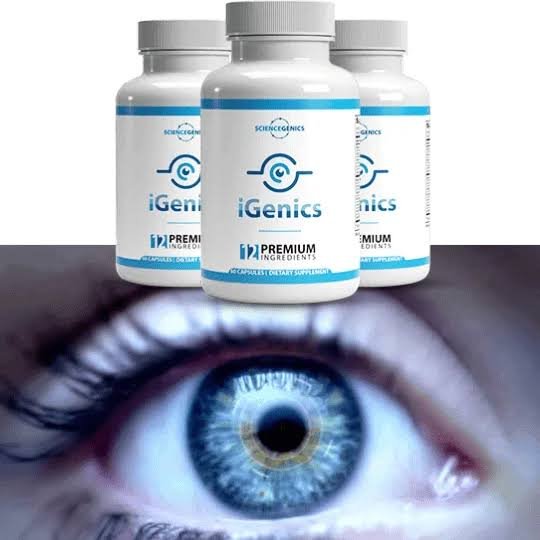
We combed through public reviews and customer feedback for the formula referenced in this piece, iGenics. A few themes came up again and again:
- ✓ Less eye strain by the end of a long day at a screen
- ✓ Feeling more comfortable reading small print without extra light
- ✓ A gradual sense that night driving feels less stressful
- ✓ Fewer headaches associated with visual fatigue
"My eyes don't feel as tired by dinnertime anymore. It's subtle, but I notice it every day."
"I work with fine detail all day. It took a few weeks, but I can go longer before my eyes feel like they need a break."
"Nothing dramatic overnight, but consistent small improvements that add up over a couple months."
The Formula Referenced in This Article
iGenics is a U.S.-manufactured supplement formulated around the ingredients discussed above — Ginkgo Biloba, Bilberry, Saffron, Turmeric, and the AREDS2-studied nutrients Lutein and Zeaxanthin — made in a GMP-certified, FDA-registered facility.
Check Current Pricing & Availability
Package pricing, current stock, and the manufacturer's refund policy are shown on the official order page.
- ✓ Manufactured in a GMP-certified, FDA-registered U.S. facility
- ✓ Third-party lab tested for label accuracy
- ✓ Backed by the manufacturer's money-back guarantee (see official terms)
Before You Go
Is this a cure for glaucoma, AMD, or cataracts?
No. No supplement, including this one, is intended to diagnose, treat, cure, or prevent any eye disease. This article discusses general nutrition research; it is not medical advice. Talk to an eye-care professional about any diagnosed condition.
How long before people typically notice anything?
Manufacturer guidance and user reports commonly reference 30–90 days of consistent daily use, though individual timelines vary and are not guaranteed.
Where can I buy it?
It's sold directly through the manufacturer's official site, linked above, and is not distributed through third-party retailers.
What's the refund policy?
The manufacturer's current refund window and terms are listed on the official order page at checkout — please review them there before purchasing.
We use cookies to run this site and, with your consent, to measure ad performance. See our Privacy Policy for your CCPA/US privacy rights, including opting out of data sharing.